Key points
- Hot coffee belongs in double-wall steel, because glass dislikes sudden jumps in temperature.
- Close the flip spout or the sliding lid every time you move with a hot drink.
- Keep hot cups away from table and counter edges, as the American Burn Association advises.
- Cool a scald under cool running water for 10 to 20 minutes, with no ice, butter or creams.
Why hot coffee goes in steel, not glass
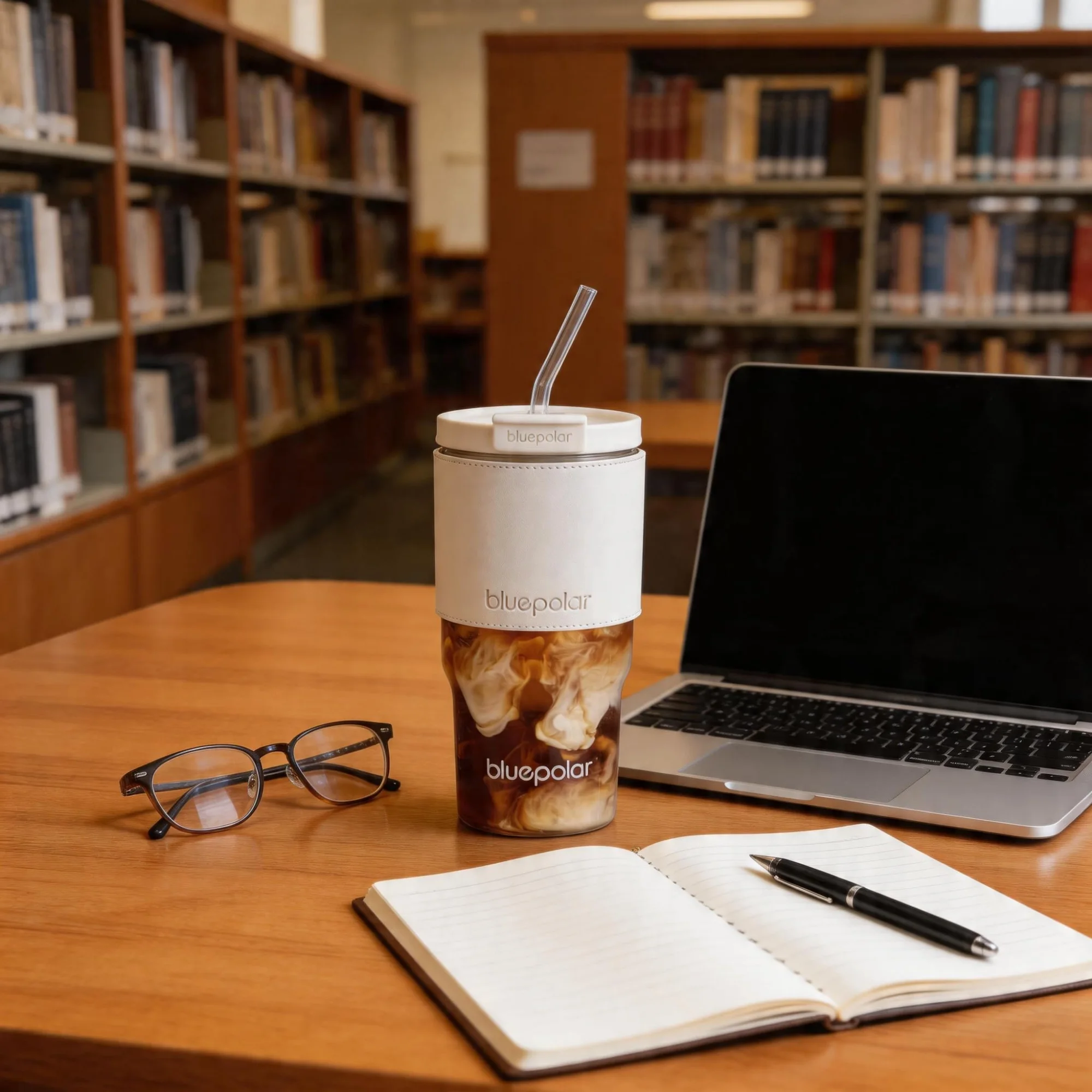
Our glass tumblers are built around cold drinks: iced coffee, cold brew, matcha and a tall glass of water. Glass of any kind dislikes a sudden jump in temperature, so we ask you never to microwave our glasses or put them in the freezer. A glass that just held hot tea should cool on the counter before ice goes in. For a cup that goes from a hot machine to a cold car seat every morning, steel is the better material.
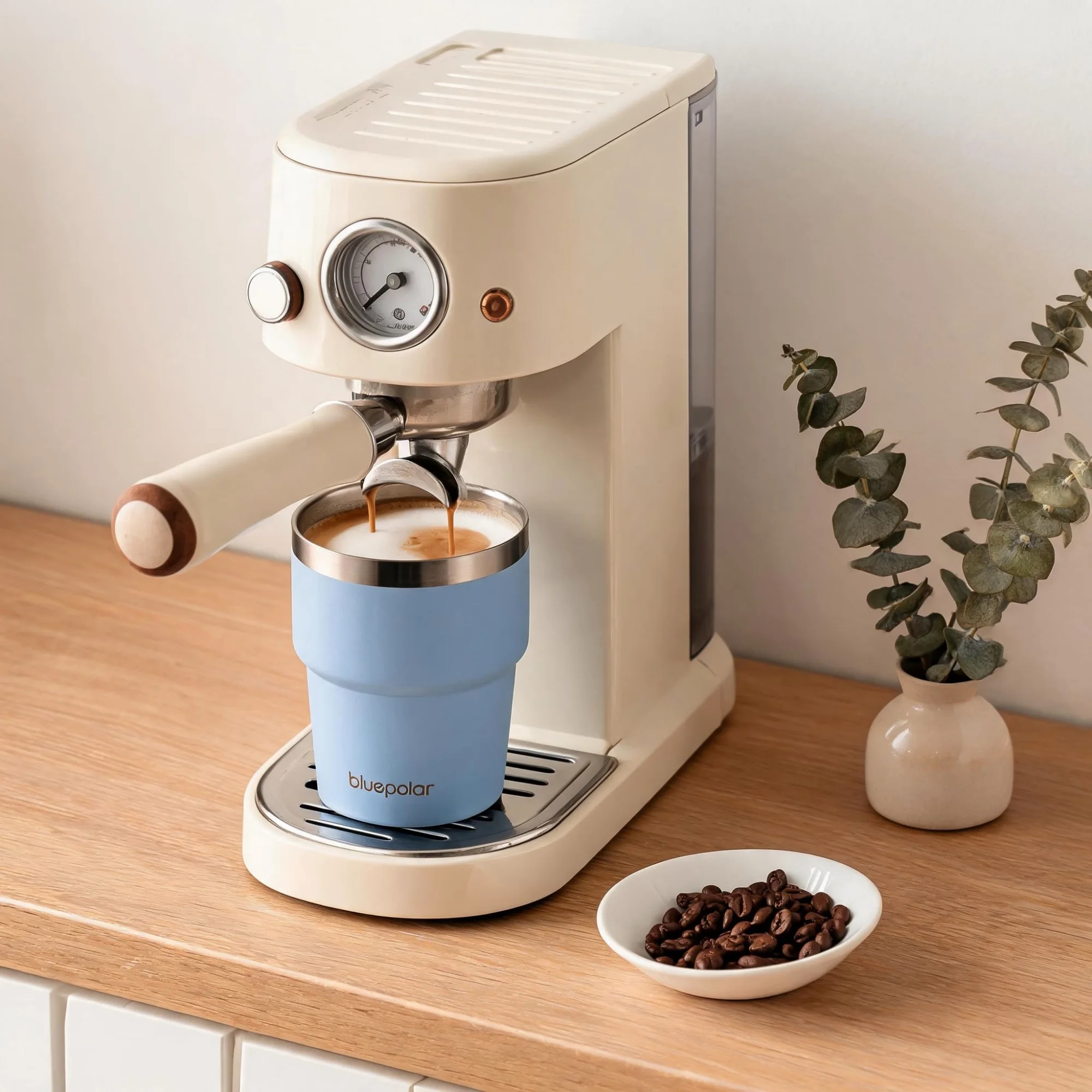
The 16 oz tumbler and the 20 oz cup are made of 304 stainless steel with two walls and a vacuum between them. Heat from the coffee has no easy path to the outer wall. So the matte outside stays cool against your palm and leaves no ring on the desk. Neither cup has a handle, and both sit in a car cup holder.
How long the coffee stays hot depends on how hot it started, how cold the morning is and how often you open the lid. Pour it straight from the machine, close the lid between sips, and the cup does the rest. Both live on our shelf of insulated tumblers, next to each other.

The 16 oz tumbler: a flip spout and a straw slot
The lid of the 16 oz tumbler has two openings. Its flip spout is for hot coffee: lift it, sip, snap it down. Beside it sits a separate slot for a straw, which belongs to iced drinks after lunch. When the cup holds something hot, keep the straw slot closed and drink from the spout.
Make closing the spout part of standing up. Snap it shut before the tumbler goes into a bag, before you carry it across a room and before you hand it to anyone. The tumbler comes in white, blue or black, and its slim body fits a backpack side pocket as well as most car cup holders. Put the body on the top rack of the dishwasher and wash the lid by hand.
Iced drinks are the other half of its day. Push a straw through the slot, leave the spout closed, and the cup that held the morning coffee carries cold brew or iced tea to an afternoon meeting. Rinse it between the two, or the iced tea picks up the taste of coffee.
The 20 oz cup: one sliding lid, two settings
Our bigger cup holds 20 oz and stands about 6.7 inches tall in matte black. Its lid slides one way to open a sip hole and the other way to take the straw. In the morning it carries a hot Americano, and after lunch the same cup takes iced tea. The bigger size earns its place on a long drive, when one cup from home has to last until you arrive.
Pour the coffee, slide the lid to the sip setting, then close it before you walk to the car. Set the cup in the cup holder before you start the engine, not at the first red light. At home the steel body can go in the dishwasher, while the lid and straw get washed by hand. Our care guide covers lids, seals and straws in more detail.
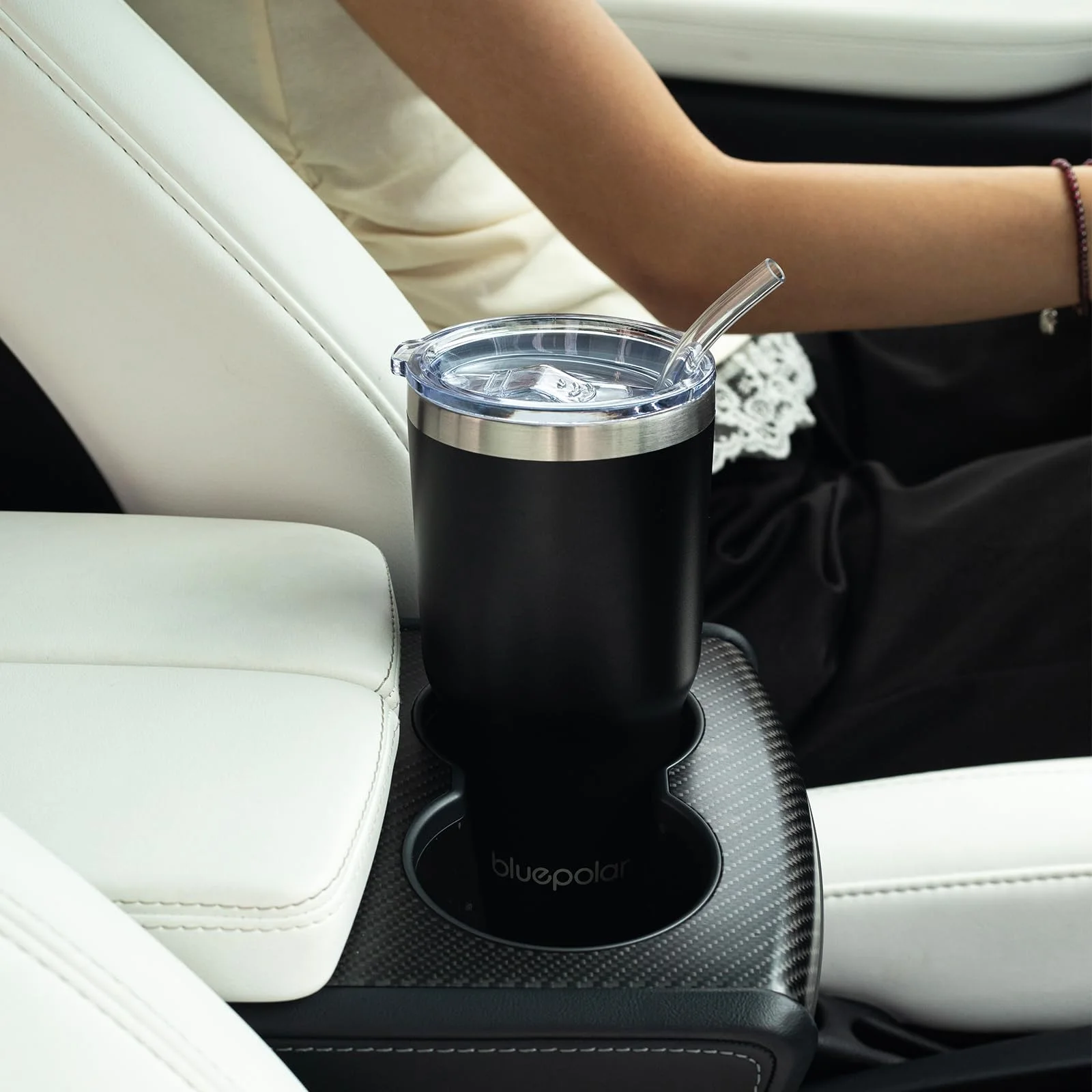
The two steel cups side by side
Both cups are double-wall steel with a lid that switches between hot and iced use. They differ in size and in the way the lid moves.
| Buy | 16 oz tumbler | 20 oz cup |
|---|---|---|
| Capacity | 16 oz | 20 oz |
| Steel | 304 (18/8) stainless, double wall | 304 stainless, double wall |
| Lid | Flip spout plus a straw slot | Sliding lid: sip or straw |
| Colors | White, blue, black | Black |
| Height | Slim cylinder, no handle | About 6.7 in |
| Car cup holder | Fits most | Fits standard holders |
| Washing | Body on the top rack, lid by hand | Body in the dishwasher, lid and straw by hand |
Hot cups, table edges and small hands
The American Burn Association lists hot drinks spilled on the skin among the common causes of scalds, which it defines as thermal burns from hot water, oil or steam. Children are the reason to take this seriously at home. Young children's skin, the association notes, burns more quickly and deeply than adults'.
Its advice for families fits in two lines. Keep hot drinks away from the table and counter edges, where a small hand can reach up and pull. Use travel mugs with tight-fitting lids for all hot drinks, so a cup knocked over on the couch has a lid on it.
At home that means a steel cup set down in the middle of the counter with its spout closed. In the car it means the cup holder up front, out of reach of the back seat. Neither habit costs a second once it is yours.
If hot coffee spills on skin
Cool the burn with cool, not cold, running water for 10 to 20 minutes. That is the first step the American Burn Association gives, and the wording is deliberate: cool water from the tap, not a bag of frozen peas.
Skip the old kitchen remedies too. The association says not to apply ice, butter or creams to a scald. If the burn is larger than a hand, it says to seek emergency help.
How much coffee fits in a day
For most adults, the U.S. Food and Drug Administration has cited 400 milligrams of caffeine a day as an amount not generally associated with negative effects. In coffee terms that is about two to three 12-fluid-ounce cups. The FDA adds that sensitivity to caffeine varies widely from person to person.
Regular brewed coffee typically has 113 to 247 milligrams of caffeine per 12 fluid ounces, according to the same FDA page. A full 20 oz cup holds more than one of those 12-ounce cups, so count ounces rather than refills. Decaf typically has 2 to 15 milligrams in an 8-fluid-ounce cup, a small number for a late cup in the 16 oz tumbler.
When the afternoon calls for something cold, the same steel cups take iced tea through a straw. Cold brew made at home has its own page in our iced coffee guide.
Every product named here is part of the BLUEPOLAR lineup.