Key points
- Every lid is washed by hand, and the seal ring of the tall glass comes out for a separate rinse every few washes.
- Never microwave a glass and never put it in the freezer: a sudden jump in temperature can crack any glass.
- Rinse a glass straw right after use, push the brush through under warm water and stand it up to dry.
- Sleeves come off before the glass is washed, and faux leather gets a wipe with a damp cloth.
Start with the lid, the seal and the straw hole
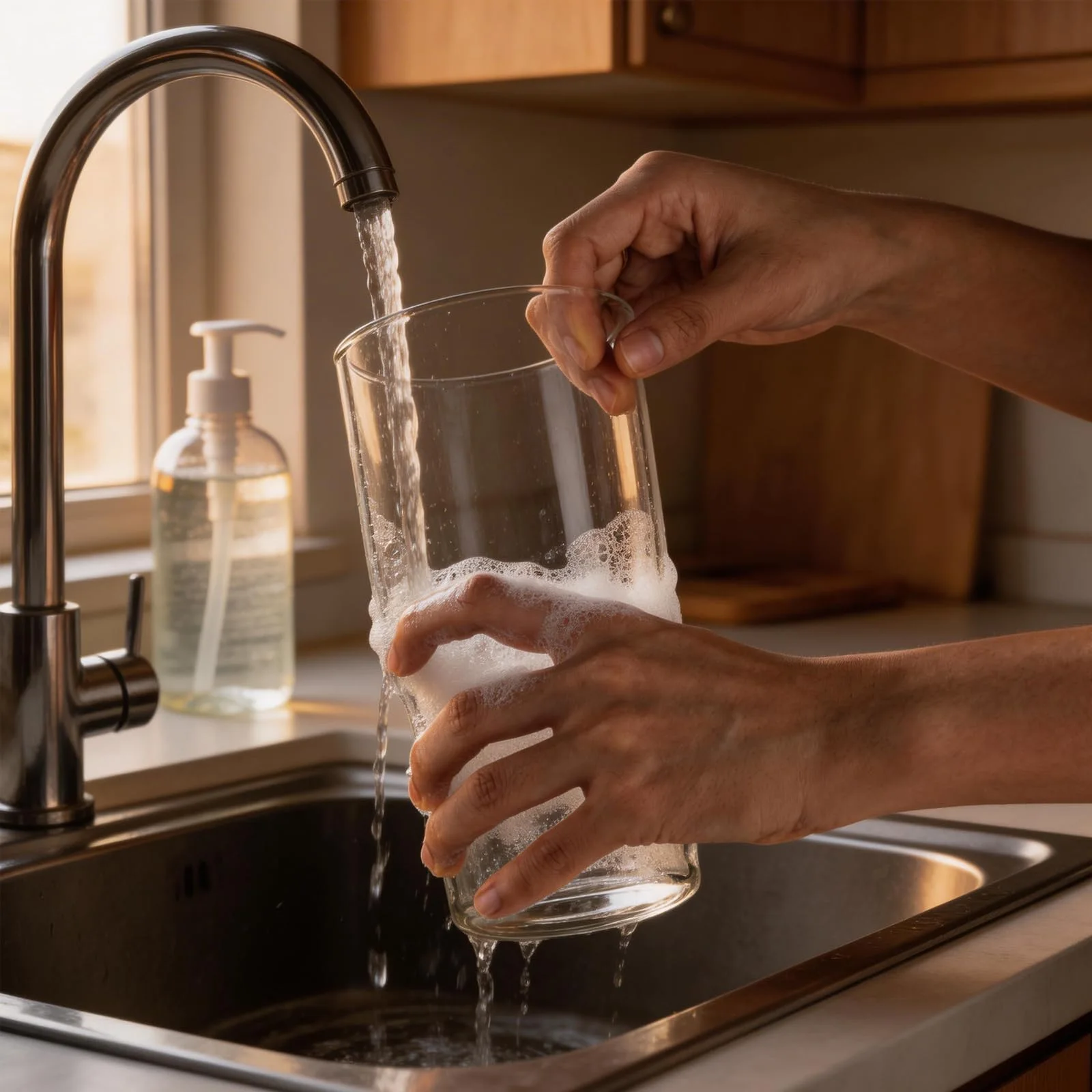
The glass itself is the easy part. Milk, sugar and coffee oils settle where you cannot see them. They hide in the straw hole, under the slider of the sip opening and around the silicone seal of the lid. Wash every lid by hand in warm soapy water, and open the slider on the 13 oz lid so the water reaches the sip hole too.
On our tallest glass, the lid, the straw and the seal ring all come apart. Pull the ring out every few washes and rinse it on its own, then let it dry before it goes back in. A ring put back wet holds a film of water against the lid all day. After an iced latte or a smoothie, rinse the lid as soon as the glass is empty, because milk is far easier to wash off before it dries.
Which glass goes in the dishwasher
Our glasses do not all follow one rule, so look at the model before you load the rack. For the classic 13 oz stacking glass, we recommend washing by hand, lid and glass alike. Its sleeved and printed cousins can go on the top rack with the sleeve off. The body of the 16 oz car glass can go in the dishwasher too. Across the whole range, though, lids are washed by hand.
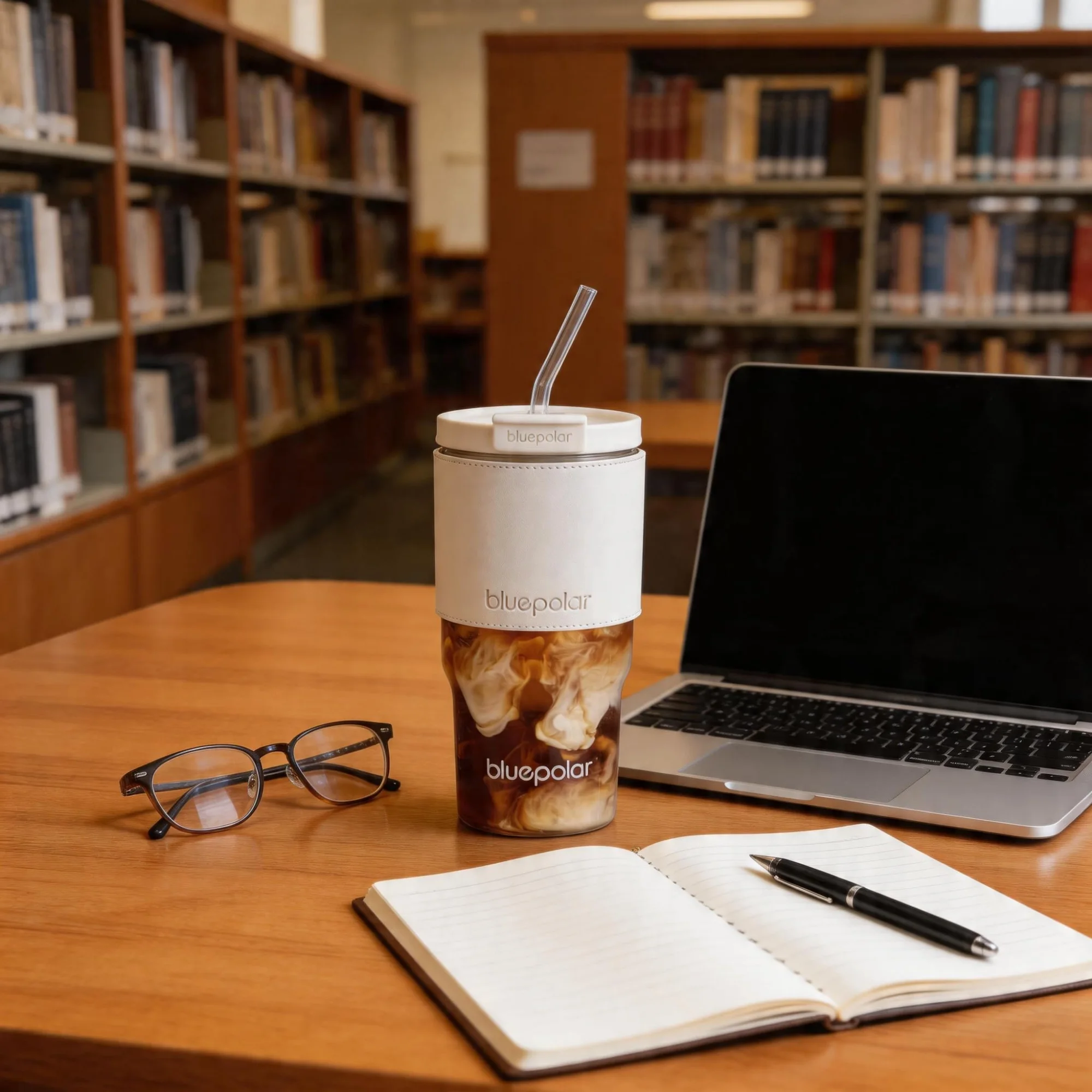
Printed glasses deserve a soft sponge rather than a scourer, so the red lettering of Bon Appetit lasts. The monogram glass is a hand-wash glass from top to bottom, with its cream sleeve wiped clean. When in doubt, hand washing never hurts a glass, and a quick wash right after the drink takes less time than unloading a rack.
| Part | How to wash it |
|---|---|
| Lids on every glass | By hand in warm soapy water, slider open |
| Seal ring of the tall glass | Pull it out every few washes, rinse on its own, dry before refitting |
| Classic 13 oz glass | By hand, as we recommend |
| Sleeved and printed 13 oz glasses | Top rack with the sleeve off, printed glass with a soft sponge |
| Monogram glass | Glass and lid by hand, sleeve wiped with a damp cloth |
| 16 oz car cup holder glass | Glass body in the dishwasher, lid by hand |
| 17 oz glass and tall glass | Lid by hand, glass washed gently by hand |
| Glass straws | Rinse right after use, brush under warm water, dry upright |
| Faux-leather and silicone sleeves | Off before the glass is washed, faux leather wiped with a damp cloth |
Why glass cracks when the temperature jumps
Glass carries heat slowly. Pour boiling water into a cold glass and the inside surface warms and expands before the outside has caught up, so the two layers pull against each other. Run icy water into a glass fresh from a hot rinse and the same strain works the other way. A small chip or scratch gives that strain a place to start, and the glass can crack along it.
Borosilicate glass, the kind in our 17 oz glass and our tallest one, expands less with heat than ordinary glass. That helps, but it does not make any glass immune to a sudden change. So the rules stay the same for every glass in our range: never microwave it and never put it in the freezer. Let a glass that held hot tea cool on the counter before ice goes in. Brew hot coffee for iced drinks onto ice in a jug, not inside the tumbler. For hot drinks on the go, our steel tumblers are the right tool.
Glass straws and the brush
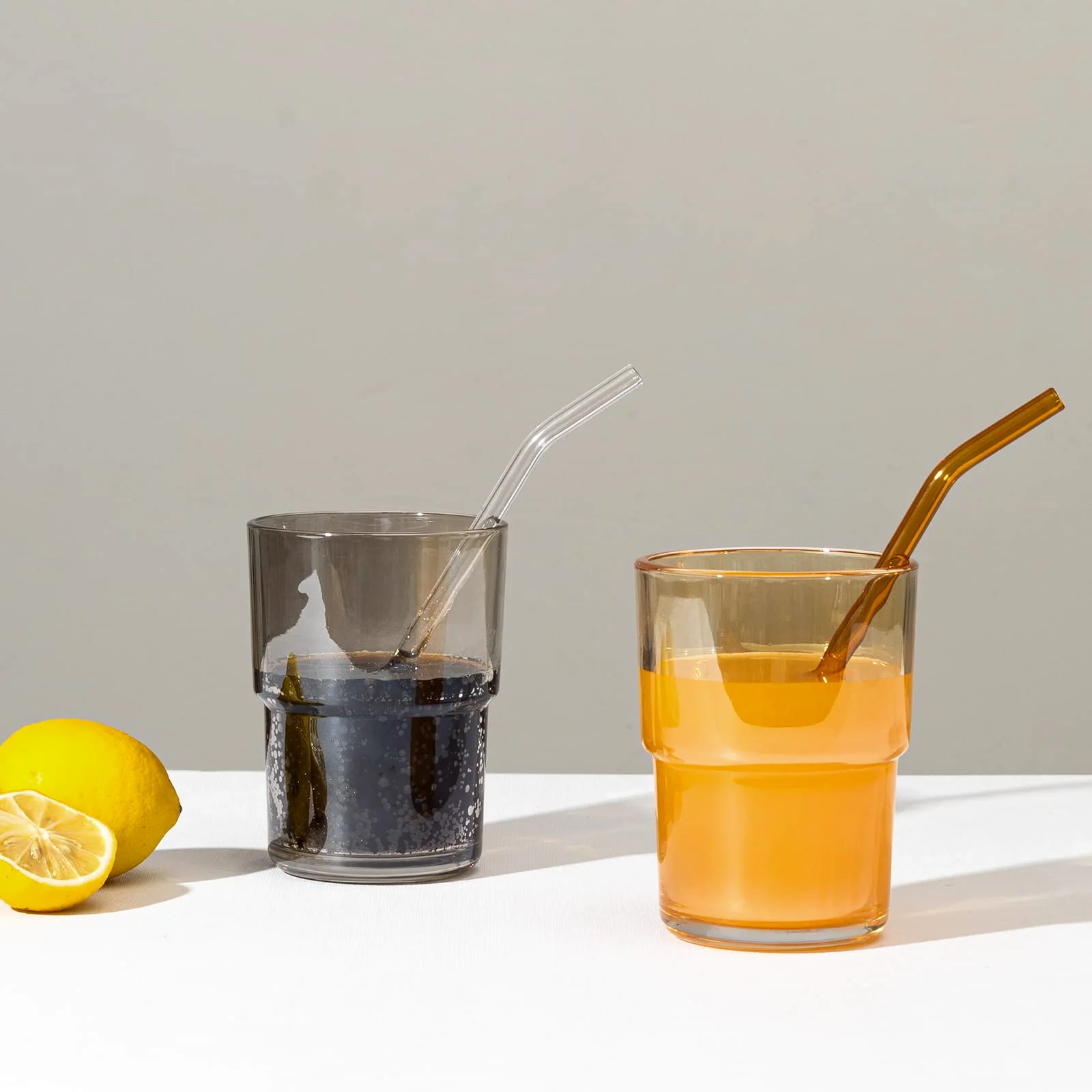
A glass straw is clean only if you can see through it, which is the quiet advantage of glass. Ours are borosilicate, 8 inches long and 8 mm across, and the brush that comes with them is long enough to clean each one end to end. Rinse the straw right after the drink, before a smoothie or milk dries on the inside. Then push the brush through under warm water and stand the straw upright to dry.
Clear straws show a film at once, and amber ones show it when you hold them up to a window. Glass can still break if a straw falls on a hard floor. If one breaks, clean up the pieces at once and keep them away from children. A four-pack of spare straws, two straight and two bent, fits the straw hole of our tumbler lids and most others.
Sleeves come off before washing
Your sleeve keeps your hand dry and catches the drops that run down an iced coffee, which also means it collects them. Slide it off before the glass is washed, by hand or in the rack. Faux-leather sleeves, the brown one on our amber glass and the cream one on the monogram glass, get a wipe with a damp cloth and time to dry flat. Put the sleeve back once the glass is completely dry, so no water stays trapped between them. Every sleeved glass of ours is on one shelf.
What the FDA says about BPA
Questions about plastic in drinkware often come down to BPA. The U.S. Food and Drug Administration describes BPA as an industrial chemical used to make polycarbonate, a hard, clear plastic, and as a structural component in polycarbonate beverage bottles. It is also a component in metal can coatings. The FDA's current perspective is that BPA is safe at the current levels occurring in foods. Its regulations no longer provide for BPA-based polycarbonate resins in baby bottles and sippy cups.
That is the agency's view of a material, not a statement about any particular lid. The part that touches your drink longest in our glasses is the glass itself, and the part you wash most carefully is the lid.
A reusable cup and straw in place of throwaways
Care is what keeps a glass in use for years, and that is where the waste savings come from. The U.S. Environmental Protection Agency notes that the average American once used 500 paper cups a year. Its suggestion is to keep a cup in your bag, at the office or in your car. Plastic straws, it adds, are consistently one of the most littered plastic items, so if you need a straw, consider a reusable one. On another page the EPA says the most effective way to reduce waste is to not create it in the first place. That page asks people to use reusable dishes, glasses and silverware as often as possible.
A glass that comes home clean every evening is a glass that goes out again in the morning. The 17 oz glass ships with two glass straws and a cleaning brush, so the whole kit is in one box. For picking the right size before you start, our size notes lay out every glass.
Every product named here is part of the BLUEPOLAR glassware line.